
A Man of History: Dănuț Iacob
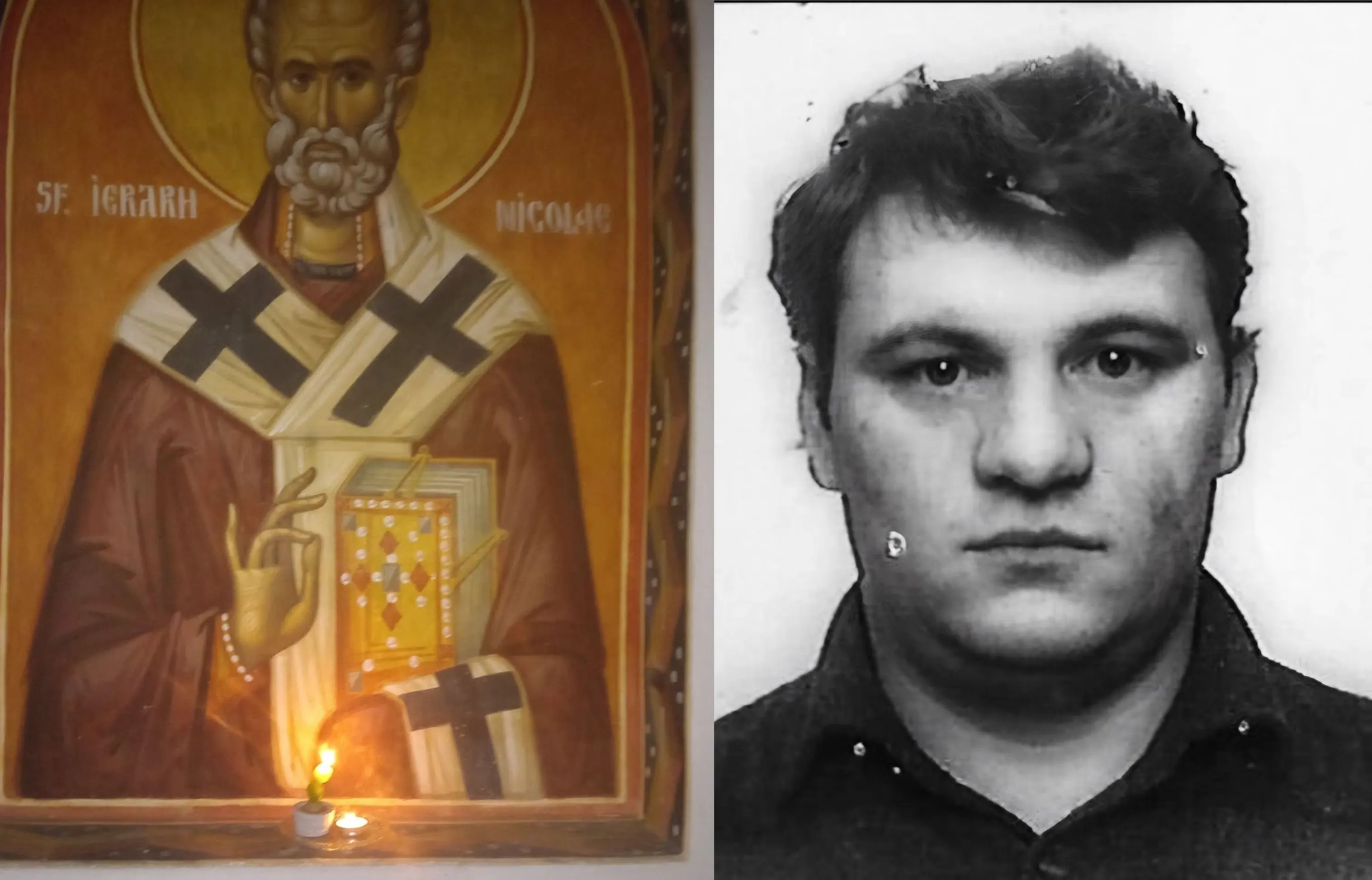
A Man of History: Dănuț Iacob
Marius Oprea
(Part One)
With boundless sadness, I write these lines in memory of one of my best, most loyal, and closest friends, Dănuț Iacob, Vice-President of the Association 15 November 1987. When the Brașov workers from the Truck Factory in Brașov rose up in revolt, he was at their forefront, alongside Corneluș Vulpe, Aurică Geneti, and Marius Boeriu (President of the Association), his closest comrade, from whom he was inseparable until his untimely death. Dănuț had a radiant spirit; he was a builder of destinies. He took care to gather his family (his mother and sisters) around him, in a house he built largely on his own, in a commune near Brașov—at the cost of an exhaustion he ignored and which proved fatal to him. Dănuț Iacob ascended to heaven, but his heroism remains here on earth as an example. As an example for future generations, for his son Robert, for all Romanians. I recorded, from audio tapes, several interviews with Dănuț, with his wife and with his sister—also participants in the revolt alongside him—conducted over the years, beginning in 2001, together with Stejărel Olaru and Flori Bălănescu. Many of them were included in the book “The Day That Cannot Be Forgotten – 15 November 1987,” published in two editions by Polirom Publishing House. My friend recalls, with bitterness but also with humor, the revolt in which he took part and the heavy price he paid for having understood, from a very young age, what the price of freedom is. I loved him, as did all those who knew him. May it be that, by reading these lines, you will come to love him as well. (Marius Oprea)
“I Could Hardly Wait for This Moment”
On 15 November I voted for the first time — I was 19 years old. After that, I went to work and was surprised to see people gathered, arguing with those in the management. Director Purcăreanu was there, and by chance I happened to be standing near him and could hear him say: “If you don’t like it, I’ll send you to the Jiu Valley!” The women began to push him, I kicked him as well, and Purcăreanu tried to slip out of the group. The truth is that I could hardly wait for this moment, and I immediately began shouting for people to come out of the workshops. At one point, there were about 200 workers moving through all the sections, trying to gather as many people as possible. Near Section 620, an engineer tried to close the door. Of course, we jumped on him with our feet and beat him there. The guys came out, went through the other sections, and we smashed the display cases. I was with Corneluș Vulpe, and we were breaking all the display cases — each section had showcases with the best parts and photographs of the most diligent workers, leaders in the socialist competition. In front of one section, Mayor Dumitru Calancea and someone else from the party leadership tried to intervene. He was booed and immediately left in a black Dacia with yellow license plates. Then came the moment when we gathered in front of the administrative headquarters and demanded to speak with the directors. No one came out. Nuts and bolts were thrown through the windows, then the food mess tins. The ground was covered with cabbage; there were about twenty tins thrown, all filled only with cabbage. Captain Damian gave the order to open the gates, and the entire crowd went out through Gate 1. One of my colleagues came up with the idea to take the flags — it was election day. I held the ladder, Corneluș Vulpe climbed up and threw down the flags. We took only the tricolor flags — the others, the party ones, were burned. And with a few flags, those of us who were there went out onto Poienelor Street, then onto Bucharest Road. We walked arm in arm with my workmates and saw people appear on balconies and applaud us. I remember, and I can swear on my heart, that they had flowers in their hands. Moreover, although it was November, it was a wonderful day.
We reached the Informatics High School, where there was a polling station guarded by a militiaman and two soldiers. The two soldiers had no reaction when the militiaman headed toward us. He didn’t manage to say much — he was probably curious about what was happening — because he was beaten, stripped naked, and we tore all his clothes off. Immediately after this episode ended, Marius Boeriu, one of my colleagues, asked me if I knew Deșteaptă-te, române! Honestly, I had no idea; I think I knew the lyrics, but I no longer remembered the melody. We turned toward the people and asked if anyone could give the pitch. Farcaș Iosif answered — I remember he had a special voice, a vocal timbre I will never forget; he was the one who sang first. Although the first attempt was a fiasco, people managed to sing the melody, and immediately the shouting began: “Down with Ceaușescu!” We were stunned. At last, people were shouting “Down with Ceaușescu!”, “Down with communism!” and “Down with the dictatorship!” After that, we started singing Deșteaptă-te, române! again, and from the intersection we called “Three Grocery Stores” up to the party headquarters — a distance of about one kilometer — people shouted “Freedom!”, “Down with Ceaușescu!”, “Enough, we don’t want to be lied to anymore!” In that same area, a huge group of children appeared — very many children — whom we placed in front of us. They walked at the head of the column, because someone had said that in this way we might persuade the armed soldiers not to shoot at us. The children were lively, cheerful, caught up in the atmosphere; they did not really know what was happening to us, just as, in fact, we ourselves did not really know what we should do or where we wanted to go. In this way our ranks grew, especially as many people coming from the market or from shopping joined the column. The trolleybuses moved slowly alongside the people, and we kept out of their way. At one point, we began pulling down the trolley poles and banging with our fists on the vehicles, urging people to get off and join us. One of the drivers got off and came with us. Then, with the trolleybus blocked, the others could no longer circulate.
When we reached the County Party Council, curious as I was, I went inside to see the interior. I was struck by the image of the large chandelier in the hall, which was lit, but in the meantime Mayor Calancea had come out — the same figure I had seen at the factory. He tried to say something, and at that moment several women behind me began beating him with the wooden poles of the tricolor flags. They could not quite reach him; they hit us more, those of us in front, but at one point a flag struck him directly in the eye, his eyebrow split, blood gushed out, and they left him on the ground in the women’s hands. I think they began tending to him on the grass in front of the building. The flag he was struck with was the people’s response to his words: “You’re brave now, but tomorrow you’ll see!” The women who beat him were the same ones who then tended to him. The rest of us went into the building. The first thing I remember is a nickel-plated tubular ashtray, which I threw aside. Standing in the hall, I had a strange feeling looking at that superb chandelier. Later, I found out that most of those arrested were forced to declare that they had smashed the chandelier. In my statement I mentioned the ashtray — I was afraid they would demand tens of thousands of lei for the chandelier. I didn’t have much time to marvel in the hall, because people were crowding in, almost trampling us. We went up the stairs on the right side, entered a room where there was a refrigerator full of Pepsi, I tucked two or three bottles into my belt and began handing them to others. On top there was a large loaf of bread, enormous, well risen. I tore off a piece and threw it. Someone took the bread and went outside with it, saying: “Brothers, bread!”, because bread was also rationed. In the end, I didn’t manage to keep a single bottle of Pepsi — I gave them all away and they even fell to the ground. Then I entered a smaller room, where there was a stack of cheese. I happened to be there with another man, Vasile, from the Tool Shop, and together we began distributing the cheese. We threw it out the window, and from there oranges and bananas also flew out, thrown by other colleagues of mine. Probably the fact that people saw how party members lived enraged the crowd even more.
Because the offices on the right side of the building were locked, someone said that some of us might be trapped inside those rooms. The glass doors were smashed, frames and all, torn out, and we began entering the other rooms as well. There were only computers, telephones, office supplies—but the fury that had taken hold of us pushed us to throw everything out the window. We continued up another floor, and that’s how I met Marius Boeriu, a friend and workmate. He had a pocketknife in his hand and was struggling to remove Ceaușescu’s portrait. Eventually he managed to throw it out the window. Next came another room—I think it was the meeting hall. Although it seems funny now, it shows how brainwashed we were: I remember seeing a short man there who, together with four others, was struggling to talk on a red telephone. All the phones were smashed, but he was trying to use this red direct-line phone, without a rotary dial, which only had a tone. “Hello, Radio Free Europe?” they were asking. “Hello, Radio Free Europe?” Obviously, no one answered. The short man kept shouting: “Radio Free Europe, we’ve captured the party!” and the like—into the void. He was doing his thing there, while we continued the devastation. At one point, when Ceaușescu’s portrait fell, it suddenly became bright. The portrait had been covering part of the windows, and once it was gone, I could look outside and see what was happening. There were people as far as the eye could see. No one was shouting anymore, but there was a roar, a strange noise that made you feel uneasy. After looking out the window, I left the room and managed to meet my sister on the stairs, telling me that we had to return to work. She took me by the hand; downstairs we also met my wife, and together we headed back to the factory. I was thinking of climbing over a fence, changing clothes, and going home so as not to be seen by anyone. But I entered through the front. I met my father, who was the duty officer in the section, and he asked me where I had been—I couldn’t speak to him because I had lost my voice—and I went to the locker room and changed. My feet were burning because I had been wearing wooden-soled boots and had walked for kilometers. When I left, I didn’t go out through the factory gate, but through the forest, on a roundabout path. I had arranged with my wife to wait for me at my sister’s place. When I arrived there, I had no voice at all—I couldn’t utter a word, I was so hoarse. My brother-in-law told me that if arrests began, I would be taken immediately. They made me beaten eggs with sugar so my voice would return. My sister had about ten eggs in the refrigerator—they were an entire month’s ration. I ate all of them.
“When I came out of the interrogation, my parents no longer recognized me”
Dănuț Iacob
On Monday, Corneluș Vulpe and several other friends from my group had disappeared. We thought we might take advantage of the fact that we had a football team with which we played matches between sections, so we could meet after the games and have a beer together. We did not know when we might see each other again, and in this way we could talk. The next day, after another round of discussions—because two more people from our section had disappeared—I got home around 10 p.m. I was living in Săcele, and on the way I ran into a former classmate, a waiter at a restaurant, who told me: “You should know that some Securitate officers have been looking for you.” He knew the Securitate officers well, because they used to come and drink in the private rooms of the restaurant where he worked. I did not go inside the apartment. I stayed around the building for a while, walked back and forth, looked around, maybe I would see someone suspicious. Someone even told me that no one is arrested after 10 p.m., that there was supposedly an order to that effect, so I went inside around 10:30 p.m. My mother was away at a resort, and my sister, who was at home and getting ready to leave for the night shift, told me that the militia had been looking for me. At 6 in the morning the alarm clock rang, my father came, knocked on the door, and told us to get up. We woke up, I went to the bathroom, and when I came out of the toilet I heard the doorbell. A man had come looking for me. He entered the apartment and said: “You have to come to the Militia headquarters to give a statement. A rape has been committed in the neighborhood and the description matches yours. We’re going to the Militia, you’ll be confronted with the victim, she will clearly say whether it was you or not. If you have nothing to hide, what’s the problem?” My wife was frightened, she started crying and panicking. “Please, madam, calm down, he’s coming, there will be a confrontation and that’s all.” We said goodbye, went downstairs, and got into a green Dacia. In an alley, the car backed in just enough for the doors to open, the gates opened, and we all got out. At that moment they punched me in the head and started swearing at me—they were trying to intimidate me. When we entered the Militia headquarters in Săcele, I saw two other colleagues whom I used to meet at the bus stop: Aurel Buceanu and Ioan Grădinaru, commuters like me. We were all sitting in a room, talking, asking why we were there. “For November 15,” they told me. “Well, they called me in for a rape, I’m waiting for them to bring the girl.” A huge man appeared and asked: “Which ones are with Brașov, huh? These three?” — “No,” I said, “just the two of them. I’m here for the rape.” — “What rape, f… your mother!” and he hit me. Only then did I understand that I had been identified and I no longer expected anything good to happen.
We were loaded into an ARO vehicle and taken to the Militia in Brașov. They put us in a hallway and around me it felt like a slaughterhouse: people were screaming at the top of their lungs, their cries could be heard from all the offices, through closed doors. I was taken down into a cellar where I stayed for about an hour, after which I was taken up to the interrogation room. I had seen someone come out wrapped in a blanket, so the room had been freed up. “Tell us, what did you do on November 15?” — “I can’t tell you, I’m married and I was also… I had an affair.” — “Which one, what’s her name?” — “I can’t tell you her name, she’s married, would you ruin two marriages?” He hit me on the head and went out. After him came another one with his sleeves rolled up: “You’re screwed…,” exactly like that. “You liked p…, well now I’ll give it to you!” When he hit me, my whole body stretched out on their desk. He left me lying there. “You don’t get up from here!” The other one came back, the one who was trying to take my first statement. He said: “Hey, change your statement, to hell with the women and all that, change it and say exactly what you did. They’ll destroy you with beatings!” — “I don’t know, that’s what I did, I have nothing else to say.” — “Fine, then write it!” I started inventing a story, how I had gone out into the countryside with a blanket, nice weather, and so on. After he read the statement, he left, but the other one, with the sleeves rolled up, came back in and started beating me again. After they told me that there was no point in lying anymore, because my colleagues had written the truth in their statements and about me as well, I changed my story. I told them the truth.
They used all kinds of methods during the interrogation. The form of address was “citizen under interrogation.” They told us that we were not comrades with them, that the Party had educated us, raised us, and that we had not known how to appreciate all these efforts. A curly-haired man with a mustache made me look at some photographs. He took off his leather jacket, took out his pistol, and put it on the table. Then he left the room and came back a few minutes later, thinking that I would take the pistol, which in any case had no bullets. I had to look for my colleagues and identify them in the photographs. At one point another one came in: “What are you doing, huh? Are you messing with the files?” — and then came the beating. I arranged the photographs and put them on the desk just as the other one came in: “Hey, did you find yourself in the pictures?” — “Well, you know that…” He started beating me too. I was beaten if I looked at the pictures, and I was beaten if I didn’t. They asked me, pointing to the portrait on the wall: “Hey, do you know who that is?” — “Ceaușescu.” — “Hey, that’s Comrade Ceaușescu, f… your mother!” He took the portrait off the hook and told me: “Hold it with your nose!” I had to support Ceaușescu’s portrait against the wall using only my nose, until I could no longer do it and dropped it on the floor. It didn’t break, but the next round of beatings was guaranteed. I was made to stand on one leg while being watched by a German shepherd sitting in front of me. If I tried to put my foot down, the dog growled, warning me that it was preparing to attack.
The investigation in Bucharest followed. In the basement at Rahova they gave me patched military clothes and put a cap on my head. They warned me that my name was no longer Iacob Dănuț, but number 416: “If you forget this number even once, you’re dead.” So I kept repeating the number 416 in my head. They would open the peephole, shout “416,” close it, then open the door. In that interval of 15–20 seconds I had to get ready for interrogation: get dressed and stand upright, facing to the right, so I could be seen. I remember an interrogation that dragged on until late in the evening. At one point, the phone on the interrogator’s desk rang. He picked up the receiver, spoke for a few minutes, then said to me: “Look at this, my wife doesn’t believe I’m at work!” He turned the phone toward me and started beating me, telling me to scream. When he lifted the receiver again, you could hear the woman laughing. “Well, are you convinced now?” — and he hung up.
Throughout the entire investigation I managed not to give a single new name, other than those I had already declared in Brașov. I admitted that I had participated, but I gave no other names besides the ones they already knew. In a room where there was an older officer who was drawing up my psychological profile, they told me that my mother and my wife had already been arrested and that only through my statements could I still save them. Everything was staged, because I was still considered a non-cooperative person. I had written that I had broken and destroyed things in the offices of the County Party Committee, but that was not enough. They sent me to “the bicycle,” a cold, dark room whose walls were always covered with running water. In that damp room they stripped me down to my underwear and handcuffed me to a ring, in a position where only the tips of my toes touched the ground. I stayed there long enough — I don’t know how long, I can’t tell — and at some point I lost consciousness. Because of the pain, the hunger, and the beatings, I could no longer resist. After I was taken out of “the bicycle,” before being brought back to my cell, I was escorted by an officer — I think he was a colonel, because he had three large stars — and taken into a room padded in red. I stayed there for about a minute, after which the other door opened and I was taken out. They escorted me to the cell, where they left me for about half an hour to recover just enough to be able to sign the final statement — the one in which I said that I agreed to bear the costs, that I agreed with any sentence I would receive, and that, given my youth, I would try to rehabilitate myself and be a support to the Party. It was a statement of commitment at the end of which, the height of irony, I wrote that I had not given it under pressure or coercion.
In the morning, after reveille, we were all lined up. There was a lot of organizing and bustle, because we were about to be loaded into buses and taken back to Brașov. The convoy consisted of three buses, escorted by numerous soldiers armed with submachine guns. In Brașov we were unloaded into the meeting hall of the Militia, on the top floor. There they lined us up, General Mihalea came — a small man — and asked each of us whether we had recovered our belongings. I remember that my ID card and 100 lei were missing. He told my escort, Captain Dulgheru, to give me the money — which he did immediately. They took each of us home, accompanied by an escort who warned us that we had to prepare for the next day, to have decent clothes and to eat. The trial was coming. Some of us lived in dormitories and said they had nowhere to bathe and nothing to eat — so they were taken to the Party hotel. Captain Dulgheru put me in a Dacia and took me home. He opened the door and walked straight in, without ringing. I had no idea what I looked like — I hadn’t had the chance to look in a mirror until then — but I saw my mother screaming: “Alecule! Alecule!” She thought a stranger had entered the house and she was frightened. Then she looked at me, without any reaction at all. My father got out of bed and asked what we were doing in the house, and I burst into tears. I couldn’t believe they didn’t recognize me. “Fix yourself up nicely. Tomorrow, put on clean clothes,” he said. I will never forget those moments. As I was telling you, at first my mother reacted as if she had seen a stranger in the house and was scared. Then she looked at me and had no reaction — absolutely none. My father, of course, when he heard the commotion, got out of bed and said to Dulgheru: “What are you doing here, man, what are you looking for in my house?!” “Calm down, sir, I’ve brought your son home,” he said. At that moment, I broke down in tears, because my mother hadn’t recognized me. When I went and looked in the mirror, my eyes were sunken into their sockets, I had lost weight, I looked terrible, my face was full of bumps — I didn’t recognize myself either. Not to mention that after the tears started, my mother almost jumped at the man’s throat. He remained calm and opened the fridge; my mother had bought three “Plai” sausages from the resort and said, “Look, my boy has something to eat.” “You’ve ruined him, you’ve killed him,” my mother cried. She cried, I cried, my wife cried, my father cried — it was pure pain, devastation. Captain Dulgheru said: “I’m coming tomorrow morning at six. Be awake, take a bath, heat some water — there’s no hot water — fix yourself up nicely, put on clean clothes, and I’ll come get you.” And he left. My sister was on the second shift. When she got home, there was already a militiaman in front of the building. He asked her who she was, where she lived. “Be careful — once you enter the apartment, you don’t leave,” he told her. Living on the third floor, there was another one above, on the fourth floor, leaning over the railing, who asked: “Who are you looking for?” “I live here.” “With the Iacob family?” “Yes.” “Be careful — don’t leave the apartment.” So I was being guarded from above and below, so I couldn’t slip out somewhere and disappear. At home, more crying — but I’ll skip over those details. That night, after I lay down in bed with my wife, I had no reaction, nothing at all, and that’s when I panicked for the first time, because I made the connection with the red room — I had no erection. I was scared, but of course I hadn’t had one because I was hungry, exhausted, in a terrible state. Still, lying next to my wife after so long as if I were a piece of furniture frightened me. I got past that too, and in the morning, around six, they took me, brought me to the militia, loaded us again into buses, and we went to the trial.
You know how the trial went. What is worth emphasizing about the trial is that sentences were shouted out: one gets three years, another six months, and just before me, Năstase Ion — six months — and that was it. I didn’t hear my name. I told the interrogator, “Sir, I didn’t hear my name.” “Get up on your feet! What’s your name?” “Iacob Danuț.” “Six months. Sit down.” I sat down. From there, we went to the militia. They told us to go and clear our records. That was the first time they let us free on the street. We met up with Farcaș, with Vulpe — hugging each other — and went to the section. Inside, people looked at us like we were mummies, corpses. It was as if they were passing right through us. It felt like a challenge, nobody spoke, it was like a tomb. We went to the storeroom and picked up the clearance sheets. It didn’t matter what you had lost, what tool — they crossed everything out, to hell with the tools. In five minutes we were done. Normally, a clearance took at least three days, if you managed to find everyone in their offices to sign; if not, a week — including the library (it didn’t matter whether you had a subscription or not, they still had to sign that you owed nothing), CAM, the army, the Patriotic Guards, social services. So it usually took three days to a week. With us, everything was done in a maximum of 20 minutes — and that for all of us, not 20 minutes per person. From there, they told us we were free until the next day at eight in the morning, when we had to meet in front of the club for the allocation of new jobs. There, in a personnel office, we went in three or four at a time. There were three or four slick operators who took your work booklet and told you: “Râmnicu Vâlcea, Piatra Neamț.” I remember Boieriu came out — his father was waiting for him outside, my father was next to him — and they said: “Piatra Neamț.” “Oh…” his father said. I came out too and said: “Râmnicu Vâlcea. Where the hell is Râmnicu Vâlcea?” That’s all Marius told me: “Man, you were lucky — it’s close, not even 200 kilometers away.” That calmed me down a bit. The next day, again at eight in the morning, we had to report to the Militia with our work booklets, and they told us to take only the bare necessities with us: a pair of pajamas, a pair of underwear, and a spare shirt.
(to be continued in the next issue)
Abonează-te la buletinul nostru lunar
Parteneri: