
Who Is the Lamb?
Marius Balo
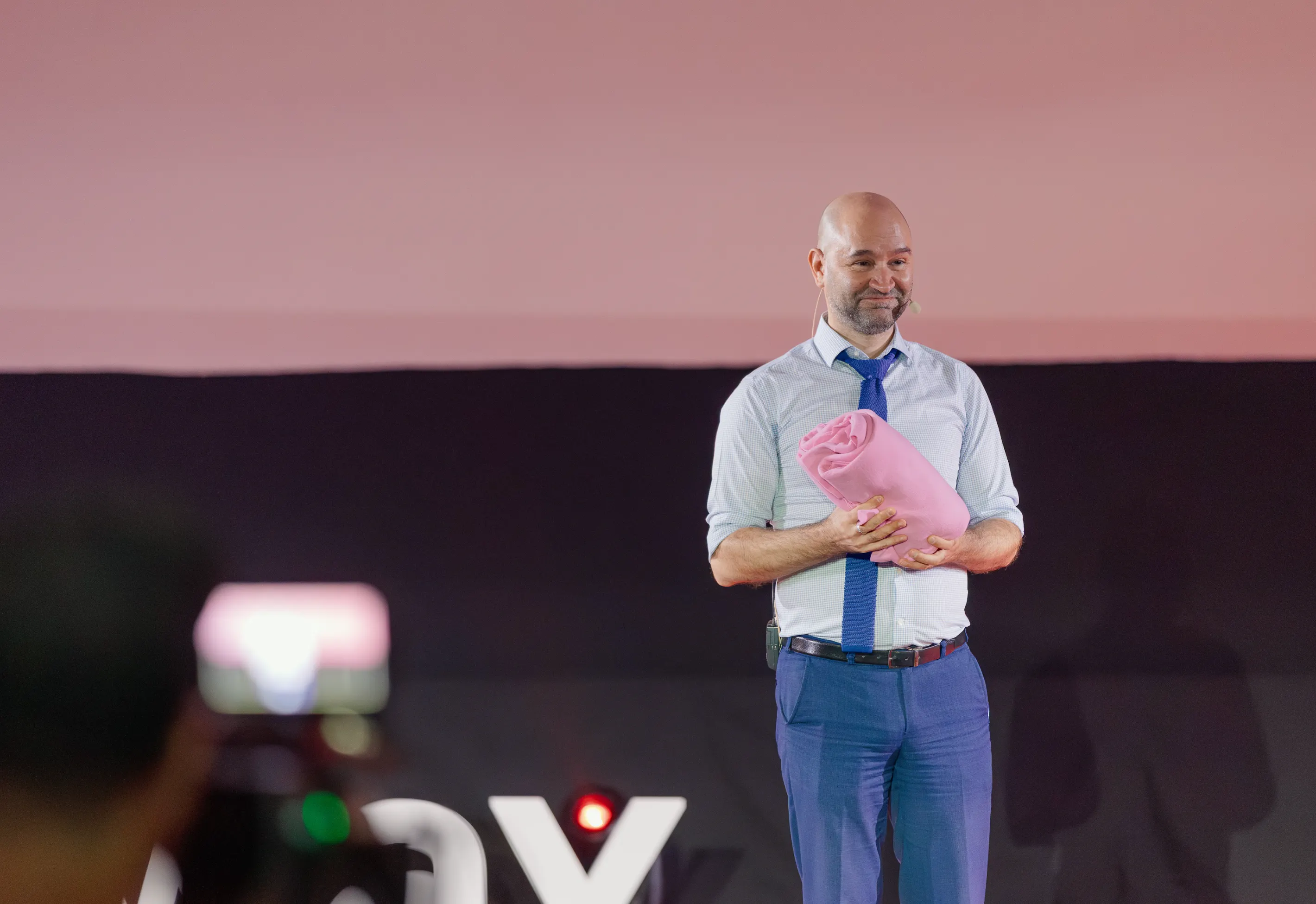
Allow me to share a story I heard during my years as a student in New York, told by my counseling professor, clinical psychologist Dr. Al Rossi.
Professor Rossi shared with us something he himself had heard from a shepherd—an actual sheep herder—during a visit to the Holy Land. Unlike the pastures in Romania, or I believe in many other parts of the world, the pastures in the Holy Land are extremely dangerous for a flock.
Numerous venomous snakes, scorpions, hyenas, and many other wild animals are constantly lying in wait, anticipating a feast in the form of a lamb that has strayed from the flock—tender and delicious.
The shepherd’s mission is therefore extremely difficult, because he must remain constantly alert, farsighted, able to foresee and prevent dangers long before they arise. Because once they appear, it is already too late.
So the shepherd confides in my professor: You know, he says, every year I face the same problem. Without exception, every year after the lambs are born, there is at least one that is more… stubborn. It wants to do only what it wants. It doesn’t stay with the flock, it wanders off, lags behind, hides in all sorts of ravines. And then—try to find it!
The shepherd leaves the flock and goes searching for the lost lamb. He finds it and brings it back. Once, twice, three times… but he knows very well what we all know. Sooner or later, one day, the shepherd will not arrive in time to save it before it becomes an appetizer, main course, and dessert for a starving hyena or a vulture that has been fasting for three days. It is only a matter of time.
And so, in order to save it, the shepherd resorts to an extreme method. He has no choice. With a heavy heart and with his bare hands, he breaks one of the lamb’s hind legs. Immediately afterward, he prepares a herbal remedy and applies it to the wound. He bandages the leg, splints it, and binds it tightly. And because the lamb can no longer walk, he carries it on his shoulders for eight weeks, until the injury heals. Eight weeks with the lamb around his neck. But once it has recovered, that lamb will never leave the flock again. Never.
The question the professor asked us at the end of the story—and which I now invite you to reflect on together—is this: where do we find ourselves in the story of the lamb and the shepherd?
Abonează-te la buletinul nostru lunar
Parteneri: